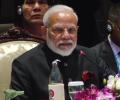
The agenda prepared by ministers will be discussed by Prime Minister Narendra Modi and other RCEP leaders in Nonthaburi, a city north of Bangkok, on November 4, the official deadline to close talks.
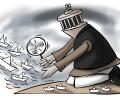
The report by the High Level Advisory Group said India stands to benefit even more when the US and China are locked in a global trade war.
Dissatisfaction with the state leadership, along with caste and sectarian factors and economic issues -- particularly those relating to jobs and rural distress cost the BJP.
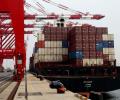
Introduced in 2015 under the Foreign Trade Policy, the mega MEIS was created out of a merger of five existing reward schemes.

Although demonetisation and improper implementation of GST along with falling prices are being blamed for much of the distress in rural India for some time, experts believe those may not be the only reason.
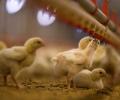
A data shows the number of backyard poultry has risen by 46 per cent between 2012 and 2019. The development is extremely positive because it provides an incentive for small and marginal farmers to rear birds.

As the number of cross-bred female cattle rise, the entire concept of lean and flush seasons for milk will go away, as these animals give similar quantities in all seasons.

The proposed policy is increasingly becoming an item of negotiation, as the US pushes hard to change India's stance.

The BJP's effort comes in the wake of Commerce and Industry Minister Piyush Goyal set to attend the eighth RCEP ministerial meeting in Bangkok from October 10 to 12.

The intention of the government is to cap prices of drugs that are essential and which the public widely uses.

Divestment in BPCL, SCI, Concor, NEEPCO, and THDC would help the Centre keep its fiscal deficit in check in the wake of subdued tax revenues and a Rs 1.45-trillion hit for the exchequer from corporation rate cuts.

Among the current FTAs with significant trade deficits for India, five are with countries from the 10-nation Asean bloc. Exports to the 10 economies stood at $ 37.4 billion in 2018-19, up by 9% year on year. On the other hand, imports were higher at $ 59.31 billion, up by 25% from the previous year's $ 47.13 billion.
The e-commerce companies believe the government is using this exercise to take an unauthorised look into their financials, shareholding and operations.
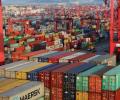
ICT products make up a minuscule $ 407 million, out of the $ 35.54 billion of total inbound shipments from the US, as of now.
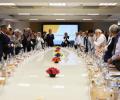
Among possible new members, former chief economic advisor Arvind Virmani's name is doing the rounds.
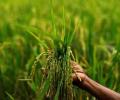
However, the estimates could change in the coming months, as full impact of excess rainfall and floods on the standing soybean and urad crops in central and western India in late August and September has not yet been fully taken into account.
It has decided not to levy the 2 per cent tax deducted at source (TDS) on cash payments above Rs 1 crore made through Agricultural Produce Market Committees.
This should augur well for the rabi crops as delayed withdrawal will leave enough moisture in the soil for early sowing.

Mastercard recently launched an authentication product called Identity Check Express that enables customers to verify transactions on their own.

Farmers should be encouraged into crops needing less of water, while ensuring a market for what they sow, said ICAR's head.
